
RENAISSANCE™ Digital Twin
Continuous modeling for predictive maintenance and AI-assisted optimization
EPCON helps refinery and petrochemical sites turn cooling water and steam flow simulation models into continuously operating digital twins. Connected to site operating data and calibrated to actual conditions, these models help engineers find utility constraints, investigate performance changes, and evaluate improvements before implementation.
Start with the equipment that limits production. Column condensers short of cooling water and column reboilers short of steam can be evaluated within the full utility network, linking equipment needs to site operating conditions.
Cooling Water System Optimization
Evaluate branch flows, pressure losses, and available cooling water at column condensers. Compare pump lineups, valve settings, and distribution changes against equipment requirements to find practical ways to improve cooling water delivery.
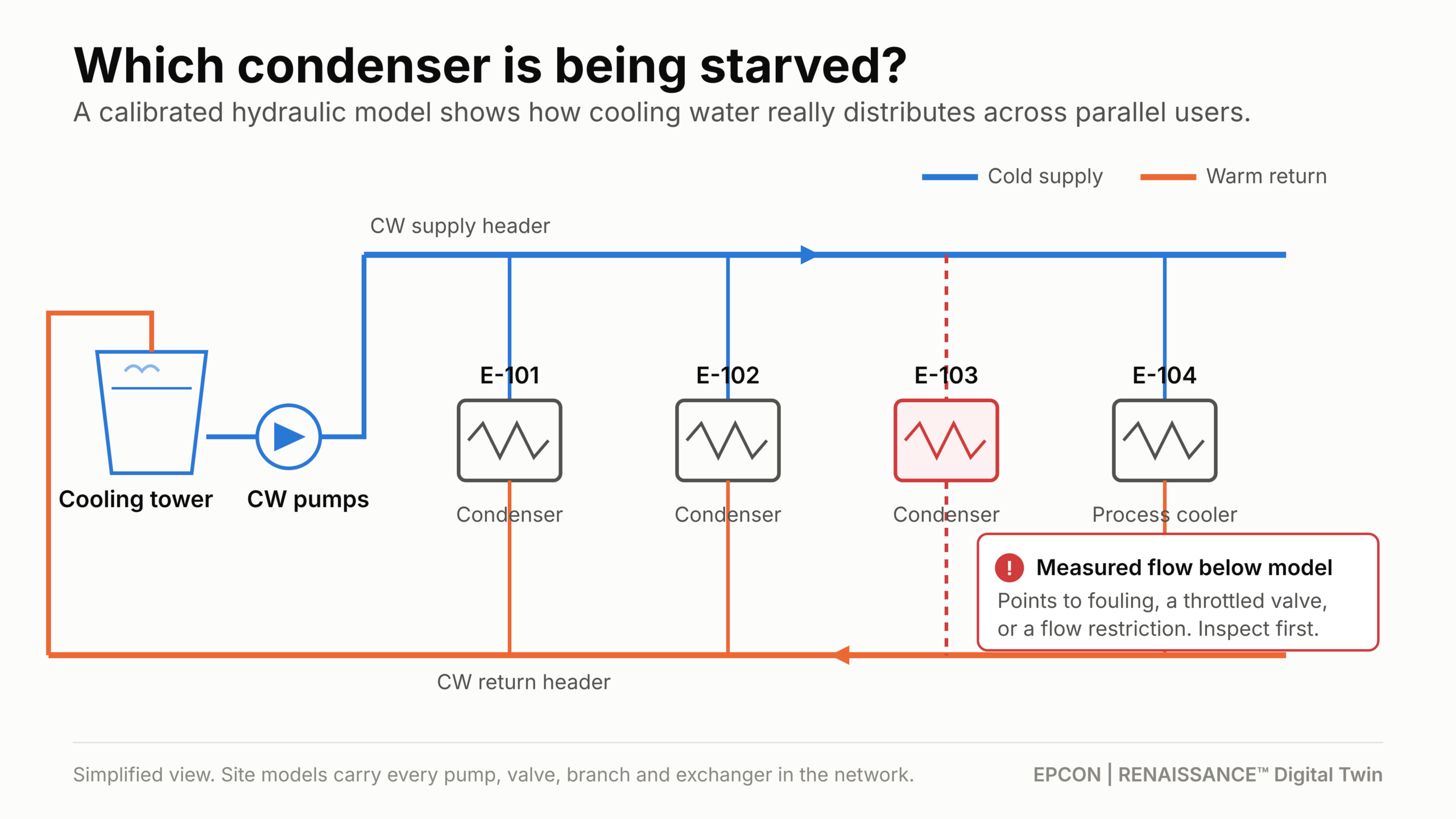
Figure 1. A calibrated hydraulic model shows how cooling water distributes across parallel users: cold supply in blue, warm return in orange, with a starved condenser flagged where measured flow falls below the model.
Predictive Maintenance
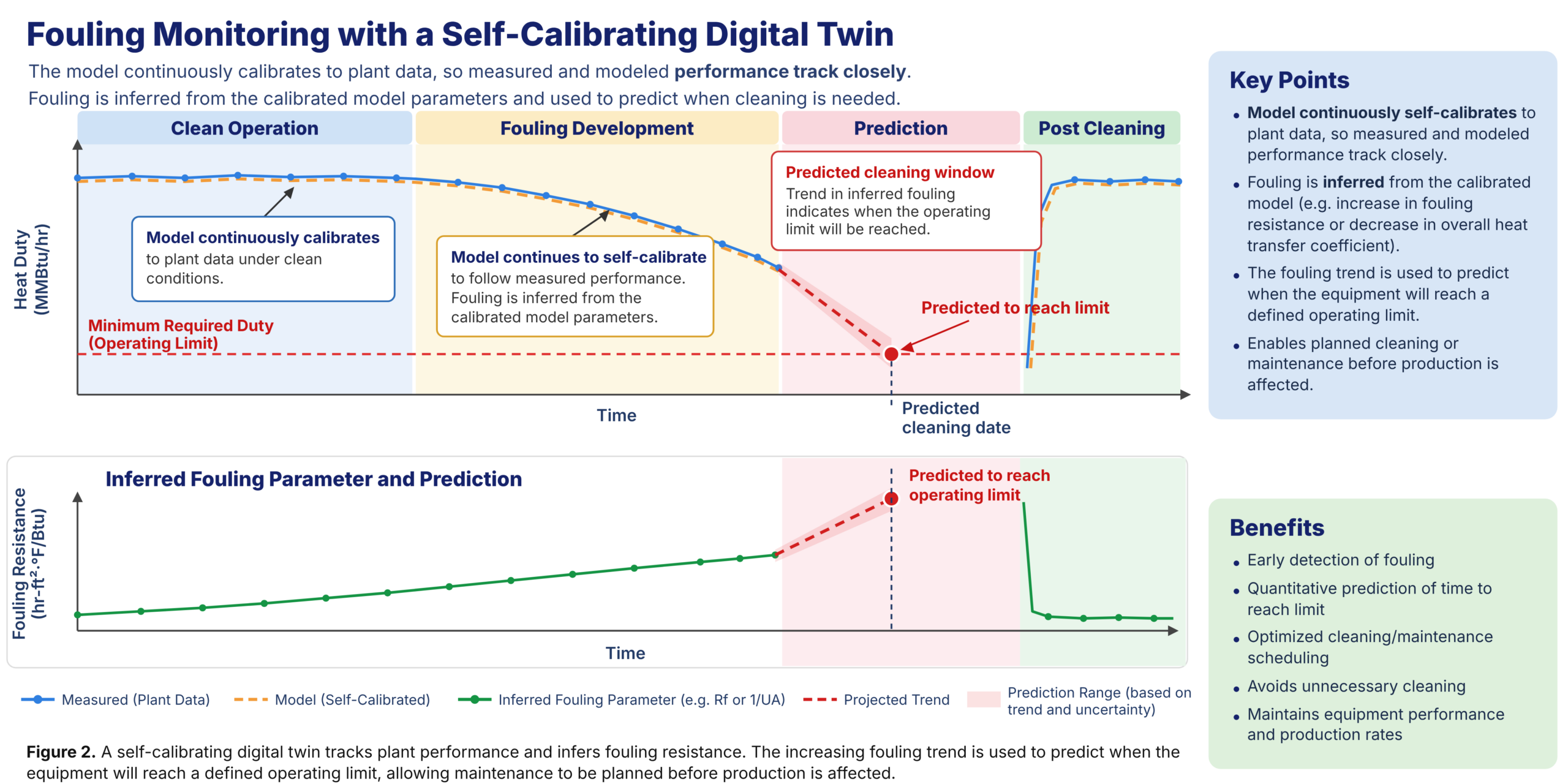
Compare measured flows, pressures, and temperatures with simulated performance as operating conditions change. Persistent deviations point to heat exchanger fouling, piping flow restrictions, or pump performance loss. Combine model trends with field checks to prioritize inspections, cleaning, and maintenance, then verify performance after the work is complete. The model is continuously recalibrated to account for fouling and flow reduction where measurements allow; exchangers that cannot be recalibrated are tracked through their deviation trends.
Steam System Optimization
Model steam supply, header pressures, distribution losses, and competing loads to evaluate inadequate steam delivery at column reboilers and other key users.
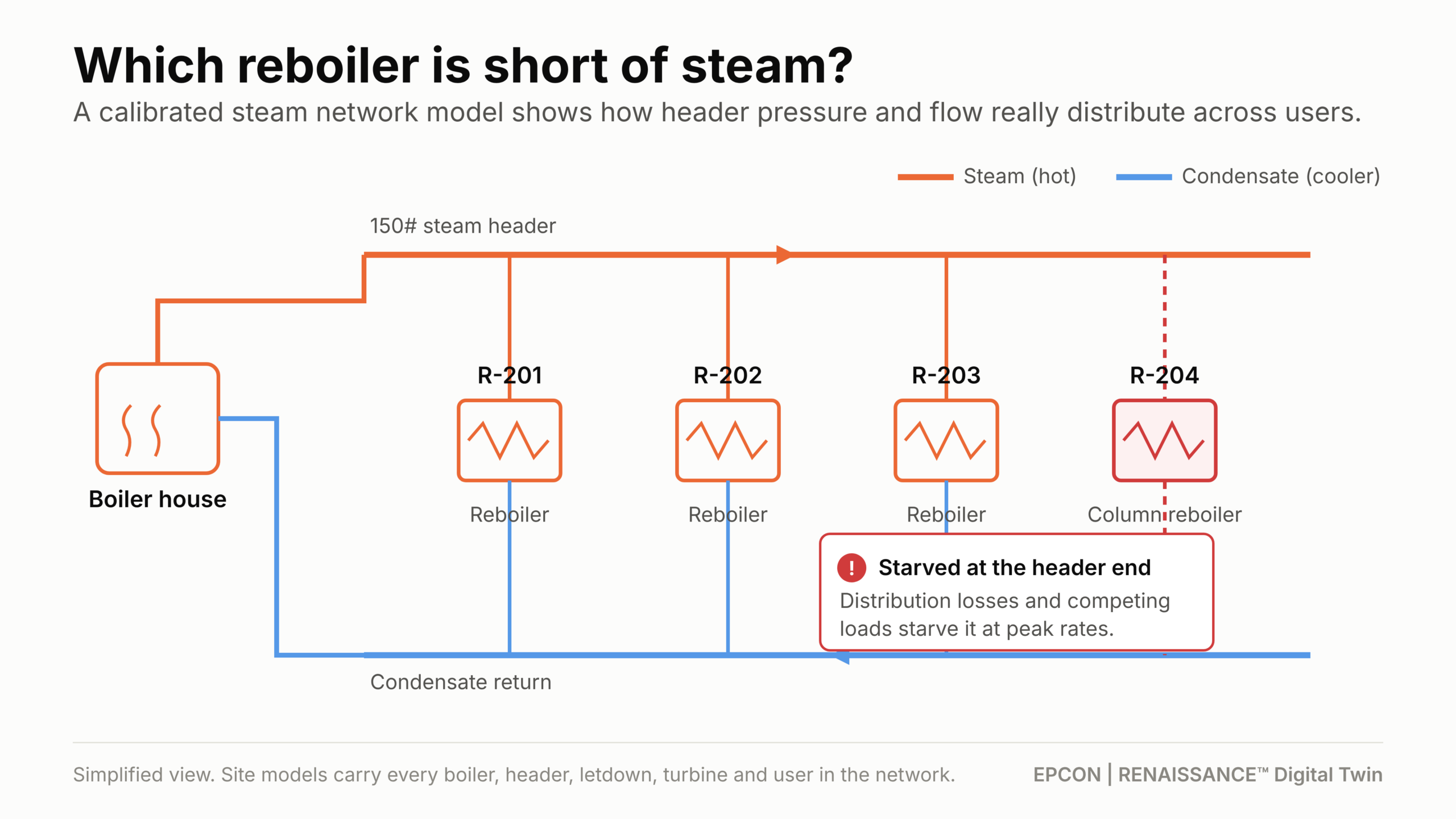
Figure 3. A calibrated steam network model shows which user is being starved: steam in orange, cooler condensate return in blue.
Distribution losses pull header pressure down between the boiler house and the last user. The model shows where the pressure goes, by how much, and which fix closes the shortfall before capital is spent.
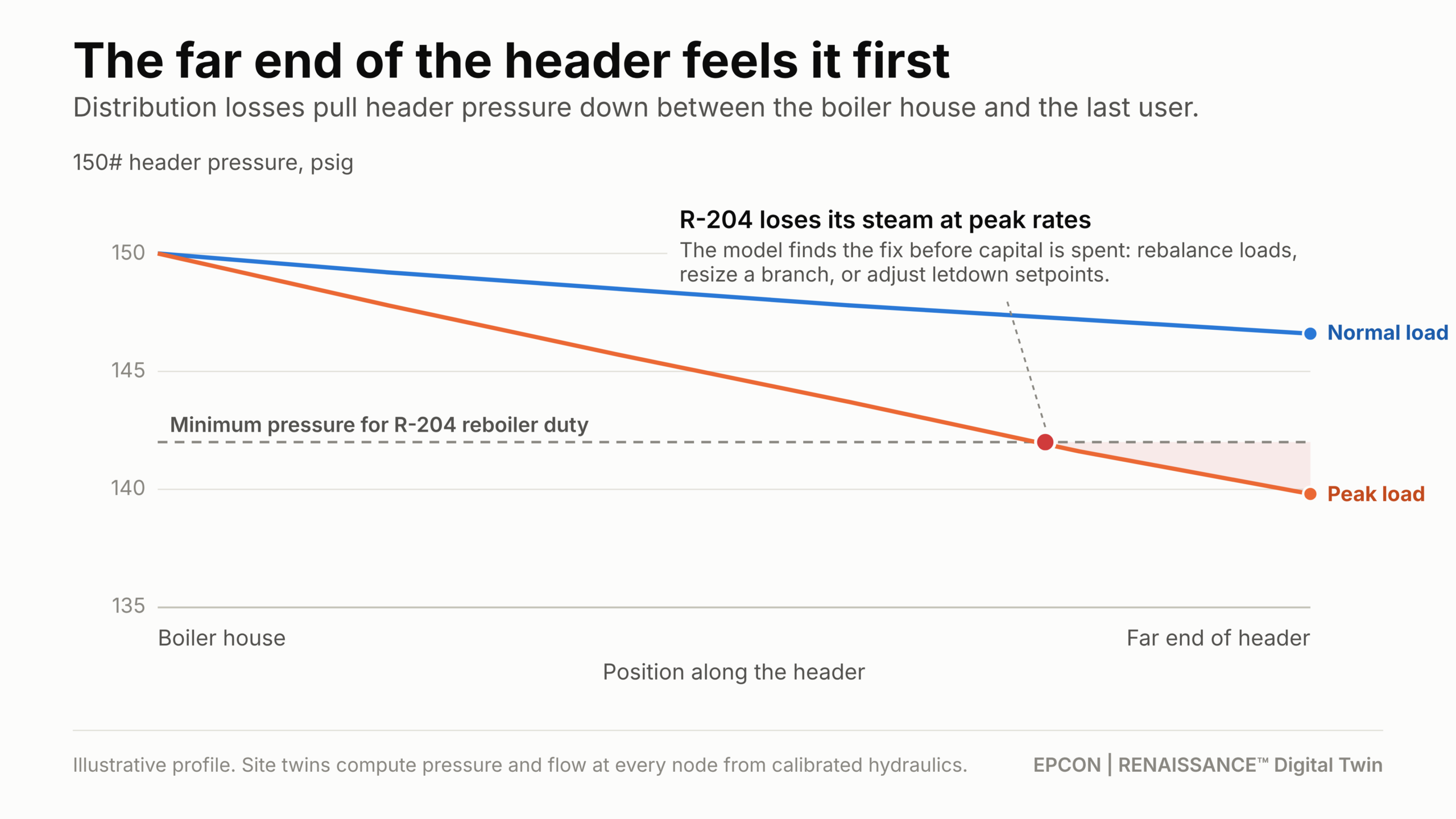
Figure 4. Header pressure profile at normal and peak load. The user at the far end of the header drops below required pressure first.
Turbines, letdown stations, and reboilers compete for the same headers, and pressure letdown across a valve gives up useful, recoverable energy. Compare operating scenarios and network changes to improve availability at constrained equipment while accounting for the needs of all users.
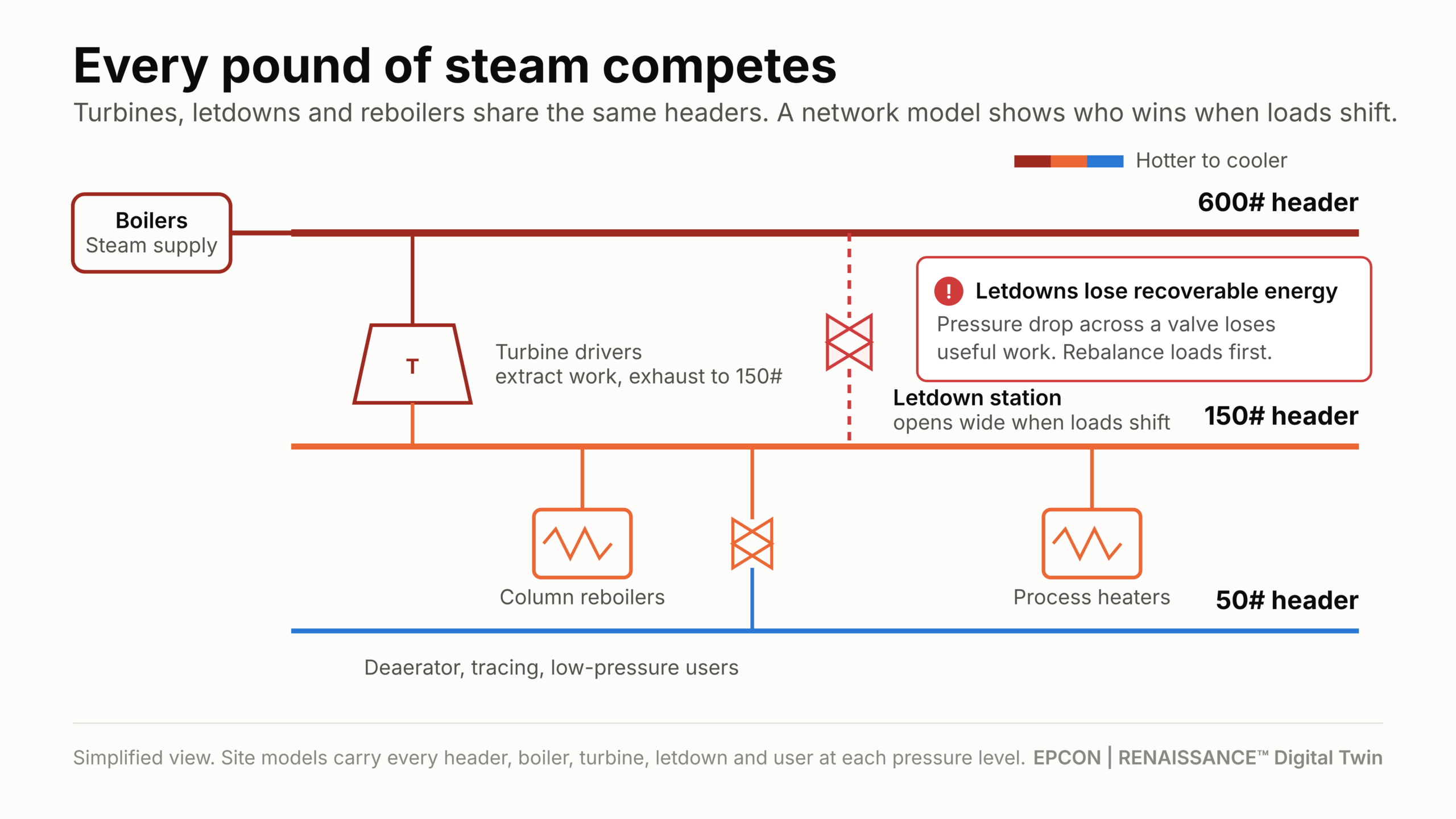
Figure 5. Pressure levels colored hotter to cooler: 600# in deep red, 150# in orange, 50# in blue. The model shows who wins when loads shift.
AI-Assisted Digital Twin Optimization
Use AI to explore operating alternatives while EPCON flow simulation models calculate their hydraulic and process effects. Set objectives for utility use, equipment duty, and production within defined operating limits. Compare feasible scenarios, review recommendations with engineers and operators, and monitor the results of approved changes.
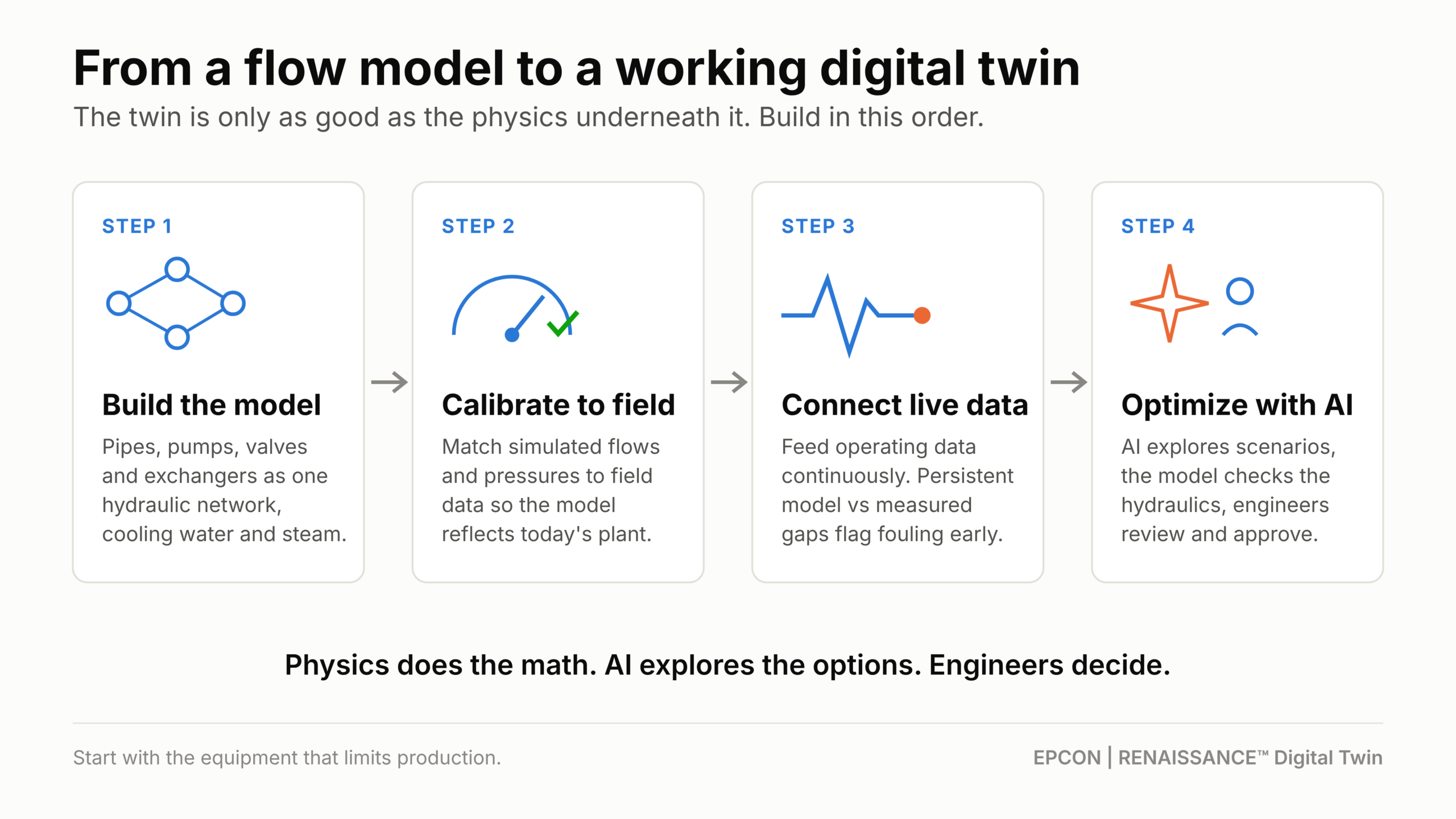
Figure 6. From a flow model to a working digital twin: build the model, calibrate it to the field, connect live data, then optimize with AI under engineering review.
Digital Twin Services for Your Site
Begin with a focused assessment of your cooling water and steam systems:
- Identify constrained equipment and review available operating data.
- Define the modeling scope, then build and calibrate the model.
- Establish continuous monitoring against live plant data.
- Use validated simulations to support maintenance and optimization decisions.
Bring Energy and AI Together at Your Site
Utility optimization and site-based AI infrastructure can create additional revenue opportunities, including the potential to significantly increase site revenues where site capacity and project economics support it. Revenue potential depends on available energy, investment, demand, and commercial agreements.
Contact EPCON to discuss a RENAISSANCE™ digital twin assessment for your site.
RENAISSANCE™ Digital Twin technology provides exceptional insights into your operations. Monitor real-time KPIs for peak performance and leverage predictive analytics to drive future success. All within a secure virtual environment that protects against costly downtime in your real plant. Elevate your asset management today!


Unlock Industrial Efficiency with RENAISSANCE™ Digital Twin Technology
Transform your operations with cutting-edge digital twin technology. Create virtual models of your systems to gain real-time insights that enhance performance, optimize maintenance, and streamline processes.
Cost Efficiency
- Proactive Maintenance Strategies – Implement data-driven maintenance strategies to prevent costly breakdowns and extend equipment longevity.
- Operational Cost Reduction – Optimize asset management to lower maintenance and operational costs, maximizing your budget and enhancing financial efficiency.
Enhanced Predictive Maintenance
- Real-Time Data Monitoring – Continuously track and analyze system performance to anticipate and prevent failures, reducing unexpected downtime.
- Advanced Predictive Analytics – Use sophisticated analytics to extend asset lifespan, ensuring long-term reliability and reduced operational interruptions.
Optimized Performance
- Dynamic Virtual Simulations – Conduct simulations to identify and address performance issues effectively, improving overall system reliability and efficiency.
- Peak Operational Efficiency – Achieve optimal performance through continuous monitoring and data-driven adjustments, ensuring your systems operate at their best.

Data-Driven Insights
- Integration of IoT and AI- Utilize the Internet of Things (IoT) and artificial intelligence (AI) to gather and analyze comprehensive performance data, providing deep insights into system operations.
- Informed Decision-Making – Leverage actionable data to drive innovation, improve decision-making processes, and enhance operational efficiency.
Strategic Asset Management
- Holistic Management Solutions – Apply advanced digital twin technology for a comprehensive approach to asset management, moving beyond traditional cost-cutting strategies.
- Enhanced Productivity and Profitability – Increase safety, efficiency, and long-term profitability with integrated asset management practices and digital twin technology.